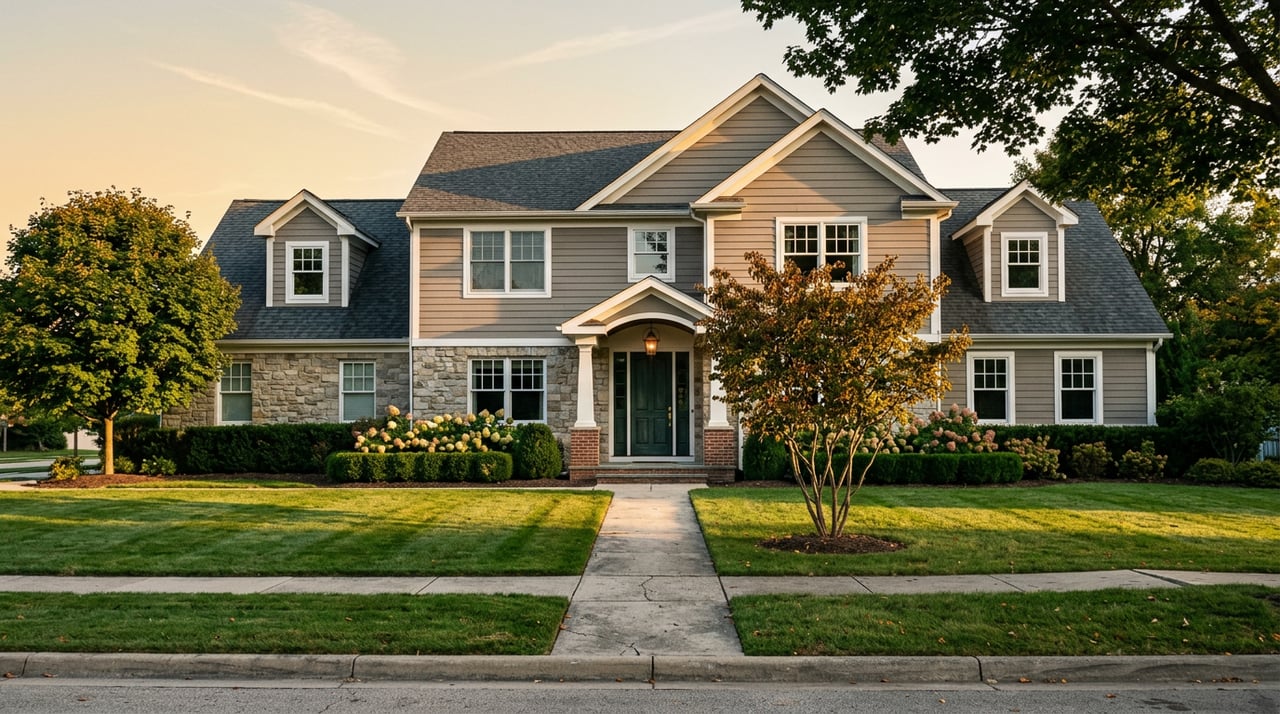
Two inspections happened in Old Bridge Township on the same Tuesday last month. One house, a well-kept colonial in Sayrewoods South, sailed through the visual walkthrough until the inspector recommended a camera run through the sewer lateral, just to be safe on a home built in the 1960s. The other, a tidy little bungalow a few miles away in Laurence Harbor, hit a different kind of snag entirely: a fill pipe sticking out of the side yard that nobody currently living there had ever noticed, and a seller who was fairly sure the house had converted to gas heat sometime before they bought it, but couldn't say when, or by whom, or whether anything got left behind.
Neither seller had done anything wrong. Neither house was neglected. What separated the two inspection days wasn't upkeep. It was geography and construction year, full stop. Old Bridge is one of Middlesex County's largest townships, and its housing stock didn't get built all at once or in one style. That means "old house" doesn't point to one problem here. It points to at least two, and they rarely show up in the same section.
The township has more than one "old"
Old Bridge's growth happened in waves. The big postwar tracts, Madison Park and Sayrewoods South, went up largely in the late 1950s and through the 1960s, part of the boom that eventually led residents to retire the name Madison Township and adopt Old Bridge in 1975. Laurence Harbor and Browntown carry an older, more mixed-vintage housing stock along and near the Raritan Bay waterfront, with some bungalows dating to the 1940s. Sections like Spring Knolls came later, built largely between 1970 and 1999, missing both of the construction-era problems that show up in the older tracts.
That split matters more than most sellers realize, because the two older zones fail differently. A 1962 colonial and a 1948 bungalow are both "old" by market standards, but an inspector walks into each one looking for something else entirely.
What shows up first in Madison Park and Sayrewoods South
Homes in these postwar tracts were built with materials that were standard for the era and are now well past their expected service life: cast iron drain stacks, galvanized or early copper supply lines, and clay or Orangeburg sewer laterals running from the house to the street connection. None of that shows up on a standard visual inspection walkthrough. It shows up on a camera.
Fifty-plus years of root pressure and soil movement have had a long run at these original lines, and the mature street trees throughout Madison Park and Browntown put steady pressure on aging pipe joints. The warning signs tend to be mundane rather than dramatic: reduced water pressure, slow drains, gurgling fixtures, or a backup that keeps coming back no matter how many times it gets snaked. A camera inspection typically runs in the neighborhood of $250 to $350 and is worth ordering on any home in this build era, whether you're buying or selling, because it tells you what you're actually dealing with instead of guessing. If it finds a compromised section, a trenchless lining repair can sometimes avoid tearing up the yard entirely, though a full lateral replacement is the fallback for more serious damage. Any sewer lateral repair in Old Bridge requires a permit through the Township Building Department, so factor that timeline into a closing date if repairs come up during attorney review.
Cheesequake and Browntown share a related version of this problem for a different reason. The transitional soil there, sandy loam over clay, combined with mature trees, creates conditions where roots find and exploit pipe joints just as readily as they do in the postwar tracts.
What shows up first in Laurence Harbor and Browntown
Here the concern shifts from pipes to what might be buried elsewhere on the property. Oil heat was standard in New Jersey homes built before 1990, and it was common practice for developers to bury 550 to 1,000 gallon tanks right in the yard during construction. When homes later converted to gas, the tank frequently stayed in the ground rather than getting pulled, sometimes with no paperwork to show it was ever properly closed out.
This is a disclosure issue as much as a physical one. New Jersey requires sellers to complete a Seller's Property Condition Disclosure Statement that asks directly about oil tanks, active, inactive, or previously removed, and courts in this state have not been sympathetic to sellers who claimed they didn't know about a tank when there was visible evidence, like an old fill pipe, sitting in plain sight. A house that predates 1985 with no documented tank history and any hint of a fill cap or vent pipe is exactly the profile that gets flagged.
The process to sort it out is fairly standard. A tank sweep, using a magnetometer to locate anything buried, typically costs somewhere in the low hundreds of dollars. If nothing turns up, that's often the end of it. If a tank is confirmed, removal on a clean site generally lands somewhere between $2,000 and $5,000 depending on size, depth, and access. If the tank leaked, remediation costs start around $8,000 and climb from there depending on how much soil, or groundwater, got involved. New Jersey's Department of Environmental Protection runs a program specifically for these residential tanks, and its own regulations require a 14-day advance notice before a closure can proceed, which is worth building into any listing timeline if you know or suspect a tank is there.
The practical reality is that most lenders won't finance a home with an undocumented underground tank, which narrows the buyer pool to cash offers if the issue surfaces late in a transaction. Sellers who get ahead of it, sweeping and documenting before listing rather than waiting for a buyer's inspector to find the fill pipe, tend to keep more control over both the price and the timeline.
Where the two problems overlap, and where they don't
Here's a rough sense of what each issue actually costs to run down, based on current New Jersey pricing:
| Issue | Where it shows up most in Old Bridge | Typical cost to investigate or resolve |
|---|---|---|
| Aging sewer lateral (clay or Orangeburg pipe, root intrusion) | Madison Park, Sayrewoods South, Browntown, Cheesequake | Camera inspection roughly $250 to $350; trenchless lining or full replacement if damage is found |
| Buried oil tank, pre-1990 construction | Laurence Harbor, Browntown | Tank sweep in the low hundreds; clean removal roughly $2,000 to $5,000; remediation starting around $8,000 if a leak is confirmed |
| Galvanized supply lines | Madison Park, Sayrewoods South | Repipe to copper or PEX, scoped and priced per property |
Spring Knolls and other later-built sections mostly sidestep both categories simply because they went up after these materials and heating methods had already fallen out of use. That doesn't mean a newer home in Old Bridge is inspection-proof. It means the inspection there is more likely to focus on the roof, the HVAC system, or general wear rather than what's buried in the yard or running under the slab.
What this means if you're getting ready to list
If your Old Bridge home was built in the 1950s or 60s, order a sewer scope before you list rather than waiting for a buyer's inspector to request one during attorney review. A clean camera report is a selling point. A surprise finding mid-contract is a delay.
If your home predates 1990 and you're in Laurence Harbor, Browntown, or anywhere with an unclear heating history, get ahead of the oil tank question. A sweep costs little relative to what an undisclosed tank can cost a deal, and documented, resolved tank history removes one of the more common reasons financed buyers walk away.
If you're buying rather than selling, ask your inspector directly whether a sewer scope or tank sweep is included, because a standard home inspection often does not cover either by default. Both are typically add-on services, and in a town where the answer depends heavily on which section you're standing in, it's worth asking before you're three weeks into attorney review and out of contingency time.
A few quick questions
Do I have to remove a buried oil tank before selling in Old Bridge? No New Jersey statute requires removal outright, but disclosure on the Seller's Property Condition Disclosure Statement is mandatory, and most lenders will not approve financing for a property with an undocumented underground tank, which in practice limits your buyer pool until it's resolved.
Does Old Bridge Township require a permit for sewer lateral repair? Yes. Any sewer lateral repair or replacement requires a permit through the Old Bridge Township Building Department, which is worth confirming early if you're working against a closing date.
Will a standard home inspection catch a buried oil tank on its own? Not reliably. A general inspection may note visible signs like a fill pipe, but locating a buried tank with any confidence requires a dedicated sweep using magnetometer equipment, which is typically ordered separately.
If you're weighing what to check before you list, or you're comparing an older Madison Park colonial against a newer Spring Knolls property while house hunting, a conversation up front saves a lot of surprises later. Michelle Wasko works Old Bridge section by section, not just township-wide, and can walk you through what to expect before an inspector ever shows up. Let's Connect.